Editorial | The Black Panther Party
Election campaigns end. The advertisements disappear. But some political decisions deserve to be remembered long after the votes are counted.
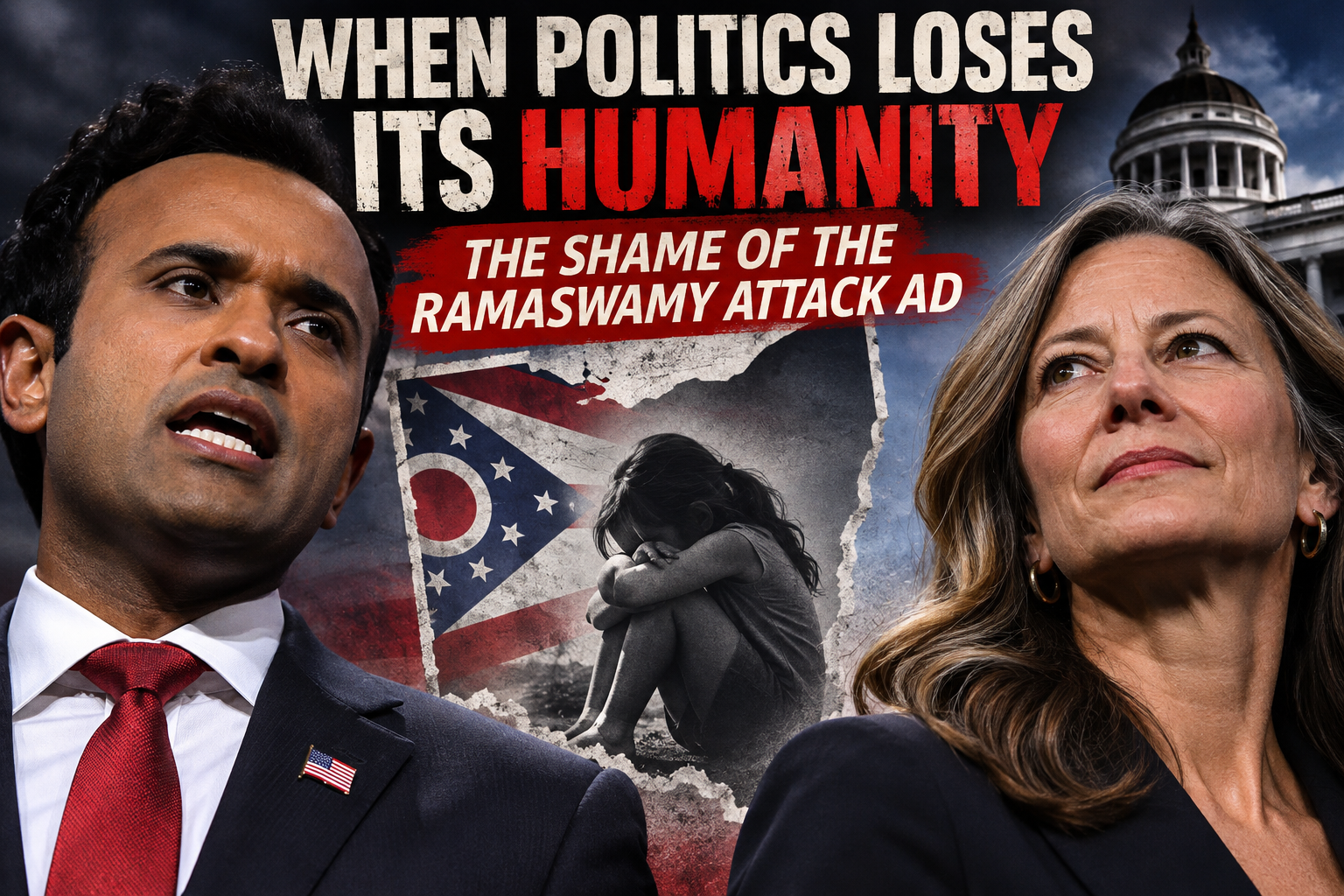
In Ohio’s 2026 governor’s race, Republican Vivek Ramaswamy’s campaign aired an advertisement featuring Donna Arthur, the long-estranged mother of his Democratic opponent, Dr. Amy Acton. Arthur accused her daughter of dishonesty. What the commercial did not adequately reckon with was the history behind that estrangement: Acton has described sexual abuse by her stepfather when she was a child, and she and her brother were removed from their mother’s custody after he was indicted on a rape charge.
When a painful childhood becomes campaign material
It is entirely legitimate to scrutinize candidates’ records, policies, and public statements. It is another matter to turn a person’s account of childhood trauma into an electoral weapon. The fact that an accusation comes from a relative does not make it automatically reliable, especially when that relationship has been severed for decades.
Ramaswamy’s campaign acknowledged producing the commercial and defended it as a question of Acton’s honesty. Acton and her brother rejected the attack. Republican Governor Mike DeWine, who had endorsed Ramaswamy, nevertheless urged that the ad be withdrawn, calling it deeply troubling. President Donald Trump and Vice President JD Vance defended the campaign’s decision to air it. The ad later stopped running.
The politics of winning at any cost
There is a reason this episode matters beyond Ohio. Political campaigns have every incentive to find a message that will dominate the news. But the ability to attract attention is not the same as the wisdom to deserve it. When a candidate’s family history becomes ammunition, voters are entitled to ask what that choice reveals about the campaign’s priorities.
For a publication committed to justice and equality, the question is not whether one party has a monopoly on cruelty. It does not. The question is whether we are prepared to apply standards of dignity consistently, even when the person crossing the line is on our own side.
Representation and responsibility
Ramaswamy’s prominence as an Indian American politician also invites a difficult conversation about representation. Greater representation in public life matters. But identity alone is not a substitute for judgment, and no community should be expected to excuse a public official’s conduct simply because that official reflects part of its heritage. Accountability must be equal, too.
What remains after election day
Campaign strategists may debate whether the advertisement helped or hurt. That is a narrower question than the one citizens should ask. Should a survivor’s painful childhood become a tool for political gain? And if we accept that tactic today, what will we accept tomorrow?
Political power is temporary. The damage we do to one another in pursuit of it can last a lifetime.
Reporting and background
Associated Press: Controversial attack ad off the air in Ohio
CBS News: DeWine urges campaign to withdraw the ad
Axios: Ramaswamy campaign and backlash
Leave a Reply